.png?width=181&height=90&name=PMA%20Brand%20Mark%201%20(1).png)

.png?width=100&height=50&name=PMA%20Brand%20Mark%201%20(1).png)

Why Nonprofit Leaders Need Better Fundraising Metrics
Many nonprofit leaders can tell you exactly how much money they raised last year. Fewer can tell you whether their fundraising is actually getting stronger.
 That gap matters more than most leaders realize.
In this episode of Your Path to Nonprofit Leadership, the conversation challenges a long-held habit in the sector. Measuring success only by dollars raised may feel intuitive, but it often leaves leaders flying blind. Revenue tells you what happened. It does not tell you why it happened or whether it is likely to happen again.
The most effective fundraising leaders shift their focus from totals to patterns.
One of the biggest mindset changes is recognizing that fundraising is not a series of transactions. It is a relationship over time. When leaders focus only on individual gifts, they miss the story unfolding across months and years. That story is where strategy lives.
This is where a small number of well-chosen metrics can change everything. Not dashboards filled with dozens of numbers, but a few indicators that actually explain donor behavior. How long donors stay engaged. How often they give. How their giving grows or stalls over time.
When leaders understand these patterns, decisions become clearer. Where to invest staff time. Which donors need deeper engagement. Which strategies are building long-term value and which are quietly draining it.
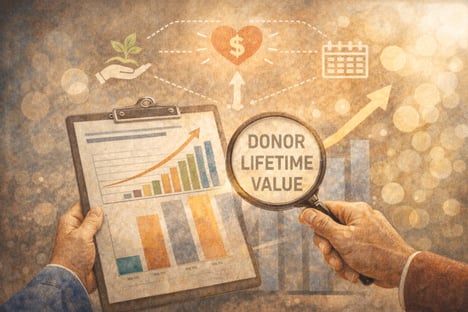
One number in particular has outsized influence. Donor lifetime value. Not because it is complicated, but because it forces leaders to think differently. Lifetime value shifts the question from “How much did we raise?” to “How much value does this relationship create over time?”
That shift has ripple effects. It reframes donor communication. It changes how success is reported to boards. It pushes organizations to prioritize retention, stewardship, and relevance instead of constant acquisition.
Another important idea is that donors give in proportion to the value they perceive from the relationship. This does not mean perks or recognition. It means clarity, trust, responsiveness, and a sense that their involvement matters. When donors feel known and respected, generosity follows naturally.
Leaders who understand this stop chasing volume and start building depth. They invest in experiences that strengthen connection. They notice when engagement drops and respond early. They see fundraising as a partnership rather than a pipeline.
Metrics, when used well, support this approach rather than replacing it. Data does not eliminate the human side of fundraising. It sharpens it. It helps leaders see where relationships are thriving and where they need attention.
Boards benefit from this clarity too. When leaders report on the health of the donor base rather than just the cash balance, conversations become more strategic. Board members can ask better questions and support smarter decisions.
The goal is not to become data obsessed. It is to become data informed. To measure what actually drives results instead of what is easiest to count.
Fundraising that works is not louder or more aggressive. It is more intentional. It is grounded in understanding how donors behave and why they stay.
When nonprofit leaders track what matters, they gain more than insight. They gain confidence. And that confidence shapes better strategy, stronger relationships, and more sustainable impact.